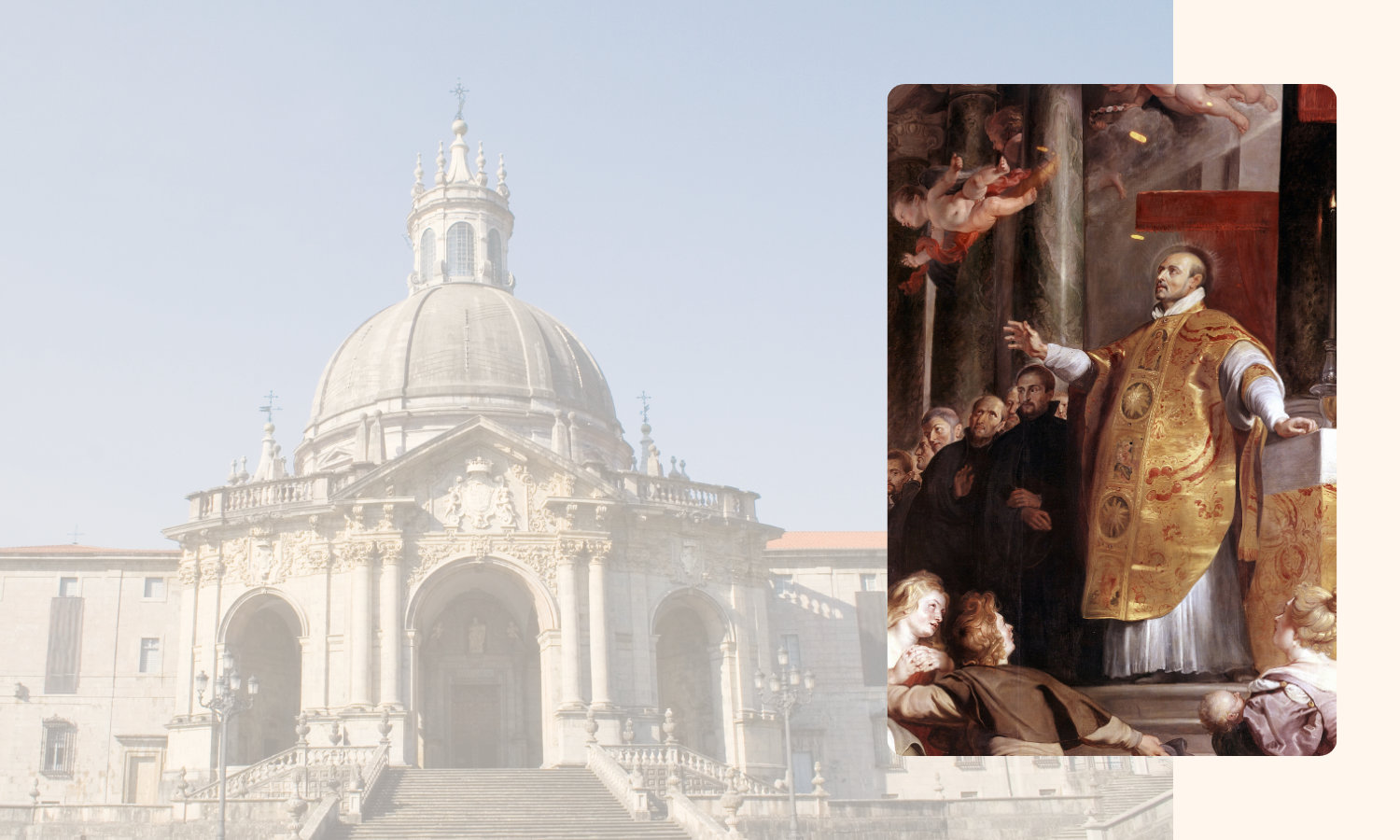
St. Ignatius of Loyola (born around 1491 at Loyola in the Basque region) began as a courtly and military man, seeking glory and moving in the world. In 1521, during the defense of Pamplona, he was gravely wounded by a cannonball and endured long convalescence; to pass the time he first turned to romances of chivalry, but there were none available, so he read books about the life of Christ and the saints. This experience gradually shifted his desires
toward God and toward imitating the saints rather than pursuing worldly honor. Later, after this inner change, he set his course more decisively toward prayer and penance, including pilgrimage after seeing the Mother of God and the Child.
That deeper conversion matured particularly at Manresa, where he lived for nearly a year in prayer, penance, and solitude; and it was there that the ability to discern the movements of the spirit came into sharper focus. After a period of peace and heavenly consolation, Ignatius was overwhelmed by “fears and scruples,” finding no comfort in prayer, fasting, penances, or sacramental consolation, and interpreting even ordinary steps as
possibly sinful—experiencing a kind of spiritual darkness that culminated in the need to understand what was happening within his heart. During this time he began to note down material that would become the Spiritual Exercises, and after his tranquillity returned he recognized that his experience had taught him both how scruples work and how to discern them.
Through his 14 rules for discernment of spirits, St. Ignatius teaches us how to progress in the spiritual life by being aware of the state we are in - consolation or desolation - and then the appropriate actions or disposition to take in each.
He defines consolation as an interior movement that inflames love of God, increases hope, faith, and charity, and brings peace, while desolation is the opposite—darkness, disturbance, temptation, loss of confidence, and a pull toward lower things.
He also warns about deception: the evil spirit can act “under the appearance of an angel of light,” so that discernment includes learning to recognize when one should not “make a change” during desolation.
St. Ignatius is the heavenly patron of spiritual exercises and retreats.
|